

Have you noticed that many people in today’s workforce expect work to feel comfortable? Difficult projects, unfamiliar responsibilities, or stressful conversations can be easy to avoid. That creates a daily challenge for leaders. How do we encourage people to stretch while still helping them feel supported?
Good leadership does not ignore how people feel. Our role is to help them face the parts of work that are uncomfortable but necessary.
Handle resistance with curiosity
When someone resists a task, it is tempting to label them as difficult, unmotivated, or unwilling to grow. You may even be tempted to take the task on yourself. Before making that choice, pause and get curious.
Ask, “What about this task feels uncomfortable to you?, or “What feels risky to you about this?”
Give the person time to think through the answer. It may reveal that they do not understand the goal, lack a needed skill, have had a difficult experience in the past, or worry about making a mistake in front of others. Each of these valid concerns calls for a different response.
Curiosity helps you understand what is hiding beneath the resistance. It also shows the person that you are willing to listen. Listening does not mean removing the expectation. It gives you a better chance of addressing what is getting in the way.
Explain why the assignment matters
People are more willing to take on something difficult when they understand its purpose. A task can feel more manageable when a team member sees how their role connects directly to the larger goal.
Be clear about what success looks like. What decision needs to be made? What preparation is expected? What support will be available?
“Because I said so” or “I’ll do this myself” may save time in the moment, but both can miss an opportunity to build confidence and trust. When people understand why their work matters, they have a stronger reason to take responsibility for it.
Clarify what is behind the discomfort
When a task feels uncomfortable, find out what the person needs. They may need more information, practice, support, or simply the opportunity to try.
It is also important to distinguish a reasonable stretch from an unsafe or unsupported situation. Psychological safety does not mean that every task will feel easy. It means people can ask questions, acknowledge mistakes, and speak honestly without being shamed.
When someone is learning a new skill, assume they may not do it perfectly the first time. Talk through the steps. Let them observe, practice, and ask for feedback. Then give them room to do the work. Check in afterward and recognize progress, including the effort it took to keep going.
Be willing to model your own discomfort
Leaders can feel pressure to appear fearless and completely confident. But when we hide every struggle, we may come across as distant or difficult to approach.
Sharing your own experiences can help people see that discomfort is a normal part of work and makes it easier for people to see discomfort as part of their leadership journey, rather than a signal that they don’t have what it takes to lead.
We do not have to pretend that growth is easy, and we cannot guarantee that every experience will be comfortable. Our role is to create the conditions for people to learn, contribute, take responsibility, and step into leadership in a respectful and supportive environment.
When you notice someone pulling back, try these steps:
- Pause before lowering expectations or pushing harder.
- Ask what is making the task difficult.
- Clarify why the task matters and why their role is important.
- Offer support that addresses what they need.
- Give them the chance to move forward.
Growth rarely happens when everything is easy. It happens when people are willing to take the next step and know they do not have to take it alone.
A healthy team culture includes both accountability and psychological safety. When people feel safe enough to be honest and supported enough to try, they have more room to learn, contribute, and thrive.
Are you ready to stretch into your next level of leadership? I invite you to learn more about the next E4 cohort.
E4 is a four-month emotional intelligence and leadership development program that takes place in Western Pennsylvania. It is designed for a small, select group of leaders on the growth track who want focused progress. The program moves through four stages: Equip, Explore, Experience, and Excel. Each stage builds on the one before it.
You leave equipped with a concrete plan, new habits, and clearer judgment about the people and decisions in front of you. The four-month format is designed to fit your calendar, budget, or the moment you find yourself in. Learn more and sign up for the next cohort.
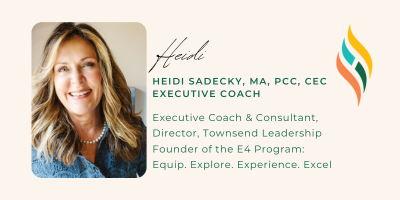
I’m Heidi Sadecky. I help leaders navigate the hard parts of leadership. If you would like to talk about what you are facing, set up a time with me.